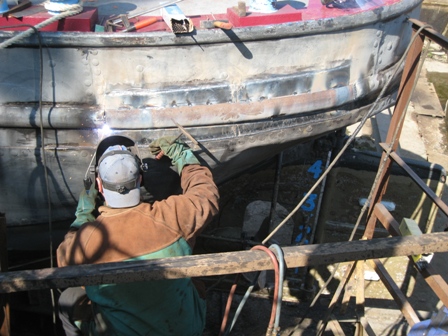
The main purpose of this dry docking was to have a hull bottom thickness survey to complete our TRIWV certification for Europe. The hull was inspected and passed with flying colours so we could then go ahead with the small list of jobs for this dry docking. Lorna treated the small areas of rust that only appeared after the boat was dried out for 24 hours and Lawrence got on with replacing the small engine water strainer with a pair of modern bigger ones. The small strainer had been a bug bear for all our cruising as it blocked up very easily and then the engine had to be stopped so it wouldn't overheat. This was often done while underway and Lorna would try to steer with no power while Lawrence quickly took apart the strainer and emptied it of leaves, sticks, plastic and dead fish.
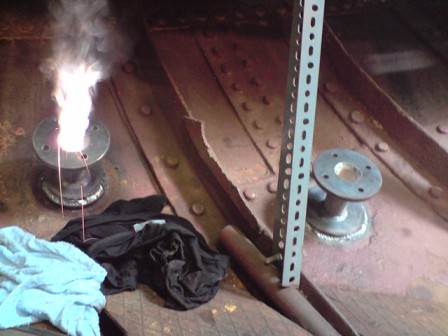
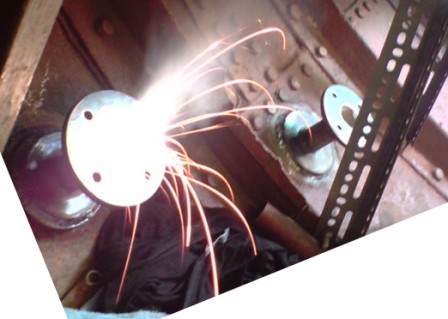
Two new flange sets were made up with one replacing the small existing strainer and the other having a new hole drilled in the hull for. Both were then welded to the hull inside and outside. |
Lawrence was on fire watch inside the engine room while the engineer welded on the outside. |
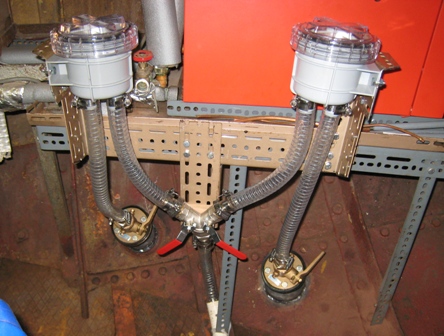
The new strainers not only have bigger baskets to collect debris but a full one can be shut off for cleaning while the other one can continue in use with the engine still running and being cooled. |
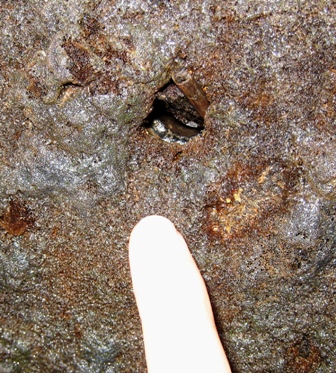
This was the outside of the old engine water intake, already partially blocked with sponges and weed making it smaller than the 1" diameter recommended in the engine specs for its intake. |
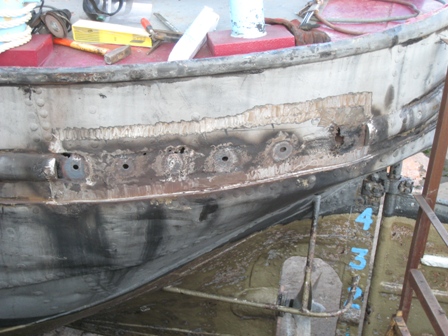
We took the opportunity to have the rubbing strake de-rusted with a needle gun and this revealed several areas with thin metal or holes. A large length of the 5" D-bar was missing near the stern and Vankerkoven welders were able to source some of the right size, bend it to the right radius and then weld it in place over a 3mm strengthening plate. A very nice job.
![]() |
![]() |